How to Adjust a Storm Door Closer Before the Cold Sets In
Turn the screw on the end of the closer tube a quarter turn counterclockwise, test, and repeat until the door latches on its own. Here is the whole fall adjustment, and the signs the closer is finished instead.
· BH Door Solutions
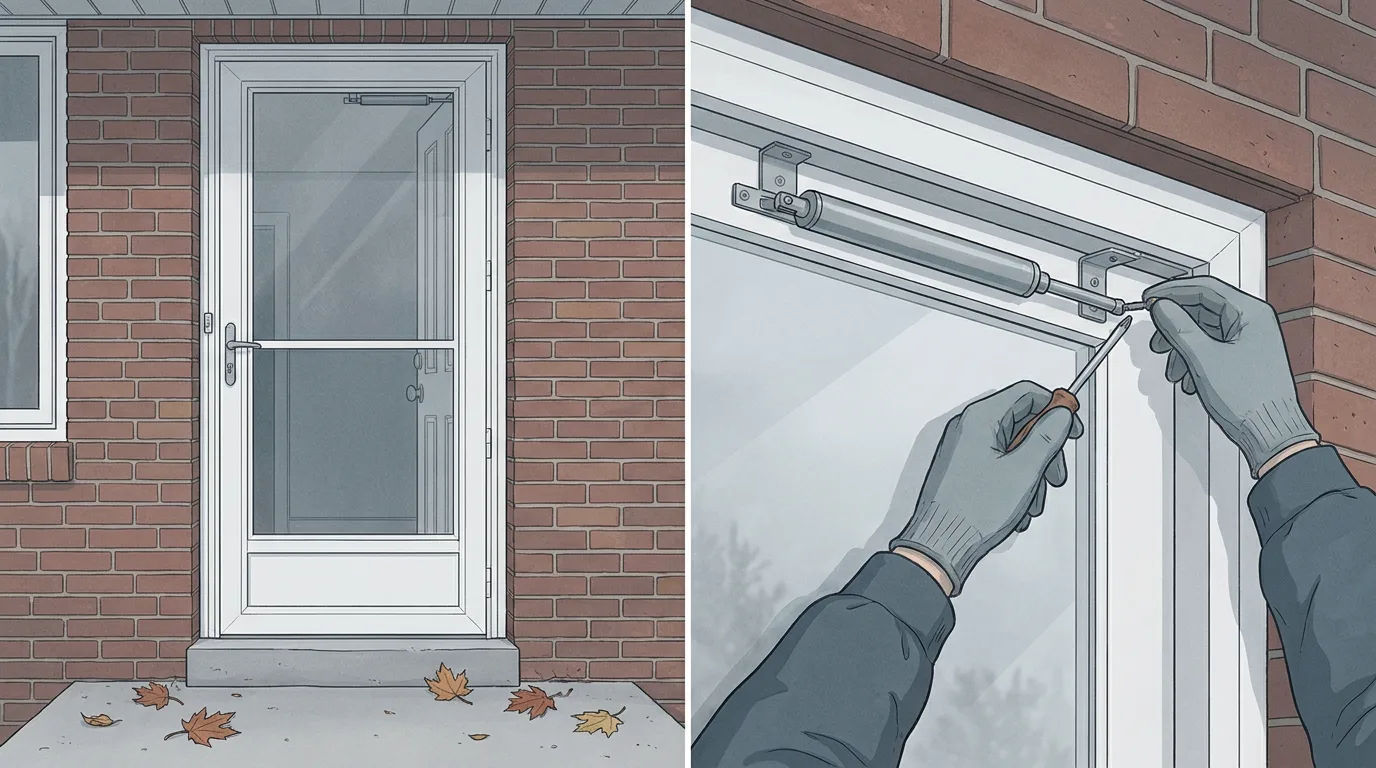
To adjust a storm door closer, find the small screw in the end cap of the closer tube. A quarter turn counterclockwise lets the door close faster and harder; a quarter turn clockwise slows it down. Make one quarter turn at a time, let the door close on its own from fully open, and stop when it latches every time without slamming. In Metro Detroit that is a fall job, because the same closer that was perfect in July starts leaving the door an inch short once the mornings drop into the 40s, and the last week of September has already brought exactly those mornings.
Why the cold changes how your storm door closes
The closer along the top of a storm door is a small cylinder with a piston inside. It slows the door by pushing air, or on heavier doors oil, through a tiny valve. Cold makes that air denser and the oil thicker, so the same valve setting lets the door travel more slowly in October than it did in August, and the spring inside has less left to finish the job in the last few inches.
The result is the most common storm door complaint we hear once the season turns: the door swings most of the way shut, stalls just short of the latch, and sits there letting the cold in against your main door. Nothing is broken. The closer is doing exactly what it was set to do in warmer weather.
Wind makes it worse. A westerly gusting across a Royal Oak or Southfield porch pushes back against a door that is already closing slowly, and a door that barely latches on a calm day will not latch at all on a windy one.
Step by step: adjusting the closer screw
You need a flat or Phillips screwdriver, depending on the closer, and about ten minutes. Most storm doors sold in the last twenty years use a pneumatic closer with the adjustment screw in the end cap of the tube. Some heavier doors have two closers, one near the top and one near the bottom. If yours does, adjust both by the same amount, or the door will twist as it closes.
Open the door fully and let it go. Watch the last six inches of travel. If it stalls before the latch, turn the screw a quarter turn counterclockwise to let the door close faster. If it slams hard enough to rattle the glass, turn it a quarter turn clockwise. Test from fully open every time, not from halfway, because the full swing is how the door is used.
Stop as soon as the door latches reliably on its own. The aim is the gentlest setting that still catches every time, not the fastest one. A closer set to slam in October will be slamming hard by January, when the weather has moved on again, and a door slammed all winter works its screws loose in the frame.
- Counterclockwise: faster, firmer close. Use it when the door stops short of the latch
- Clockwise: slower, softer close. Use it when the door slams
- One quarter turn at a time, then a full-swing test
- Two closers on the door: turn both by the same amount
The mounting pin, and the setting most people never find
Many closers are held to their mounting bracket by a removable pin that can sit in more than one hole. The holes change how much force the closer has near the end of its stroke, and several manufacturers print a recommended winter hole and summer hole on the label or in the instructions. If the screw is already well open and the door still will not catch, moving the pin is the next step. Prop the door open, pull the pin, move it to the hole the label calls for, and test again.
Look at the label before you move anything. Storm door makers do not all agree on which hole is which, and the right one for a Larson door is not automatically the right one for another brand. If the label has worn off, note the hole the pin started in so you can put it back.
When the closer is not the problem
If the door reaches the frame but the latch still will not catch, the closer has done its job and the problem is alignment. The strike plate on the jamb shifts as wood trim shrinks in dry autumn air, and a latch that lined up in summer can miss by an eighth of an inch in October. Loosen the strike screws, slide the plate so the latch meets its center, and tighten it again.
A door that drags on the threshold or rubs one side of the frame has a sagging hinge rail, usually because the screws have lost their grip in soft trim. No closer setting fixes that. On the older houses of Dearborn, Warren and Detroit the wood behind the storm door is often the real issue, and that is a door frame repair before it is anything else.
Check the wind chain while you are up there. It is the short chain beside the closer that stops the door before it swings far enough to bend the closer rod. If it is missing or hanging loose, one gust can bend the rod or tear the bracket out of the jamb, and a bent closer cannot be adjusted back to health.
Signs the closer needs replacing, not adjusting
Closers wear out, and at some point no amount of screw turning brings one back. The signs are easy to spot once you know them. A closer that shuts at the same speed wherever the screw is set has lost its seal. A rod that is bent, scratched or pitted will not travel smoothly again. An oil-damped closer that has left a dark streak down the door is leaking and will only get worse. A tube that has been dented by a door caught in the wind binds and sticks.
A replacement closer is a standard part on most storm doors, and we carry common ones on the truck. The more useful question is why it failed. If wind tore it, the wind chain needs setting too. If the bracket screws have pulled out of the jamb, the wood needs repair first or the new closer will pull out the same way.
The broader call on a door with several things wrong at once, whether to repair it or replace it, is covered in our guide to storm door repair or replacement.
- Same closing speed at every screw setting: the seal has failed
- Bent, scratched or pitted rod: it will bind no matter how it is set
- Oil streak down the door: a hydraulic closer that is leaking
- Dented tube, or a bracket torn out of the jamb: replace the part and fix what tore it
Do it now, not at the first hard freeze
Metro Detroit’s first hard freeze usually arrives in late October, and a storm door that stops latching is easy to live with right up to the first windy night below freezing. By then the door has had weeks of standing half open, the weatherstripping on the main door has taken the wind it was meant to be spared, and the closer is working at the cold end of its range.
Adjusting in late September or early October means setting the closer for the weather it is about to work through, while the mornings are cool enough to show the problem and the afternoons are still pleasant enough to fix it with the door propped open.
If you would rather have it done, or the door needs more than a screwdriver, we handle storm door repair on every brand across Wayne, Oakland and Macomb counties, including Royal Oak, Troy, Warren, Dearborn and Southfield. Call (313) 236-4558, Sunday to Thursday 9am to 5pm and Friday 9am to noon, or contact us and we will call you back.
Storm Doors questions we get asked
Which way do I turn the screw on a storm door closer?
On most pneumatic storm door closers, counterclockwise lets the door close faster and firmer, and clockwise slows it down. Turn a quarter turn at a time and test from fully open after each one. If your closer behaves the opposite way, the maker has reversed it; the label on the tube usually says which way is which.
Why won't my storm door close all the way when it gets cold?
The closer slows down as the temperature drops, because the air or oil inside it gets harder to push through the valve. A setting that latched the door in summer can leave it an inch short in the fall. A quarter or half turn counterclockwise on the adjustment screw usually brings it back.
Do I have to adjust my storm door closer every season?
Not always, but most homes in Metro Detroit do best with two adjustments a year: firmer in the fall so the door latches through the cold, and softer in late spring so it does not slam in the heat. If your closer has a winter and summer pin hole, that is the same idea built into the bracket.
Can I replace a storm door closer myself?
On most doors, yes. The closer comes off two brackets with a couple of pins and screws, and replacements are sold in standard lengths. It is worth a call instead if the bracket screws have torn out of the jamb, the wood behind them is soft, or the door also sags or will not latch, because those point to a frame or hinge problem a new closer will not fix.
Services covered in this guide
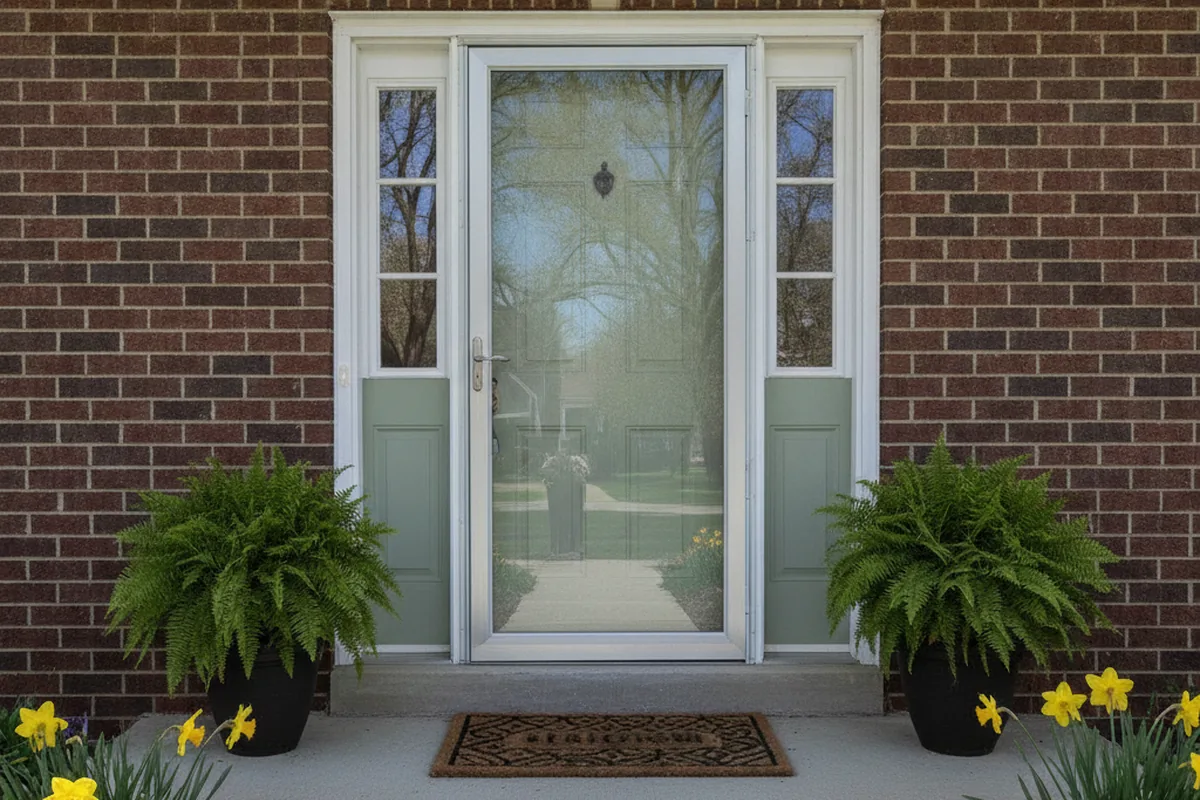
Storm & Screen Doors
Local storm door installers who supply the door as well as fit it, plus repairs to the storm door you already have.
Learn more
Door Repair
Sticking, drafty, or won't latch? We fix doors right the first time, with same-day service across Metro Detroit Sun–Thu whenever the schedule allows.
Learn more
Door Frame & Jamb Repair
Split, rotted, or kicked in? We rebuild door frames and jambs solid and weathertight, with same-day service across Metro Detroit when the schedule allows.
Learn more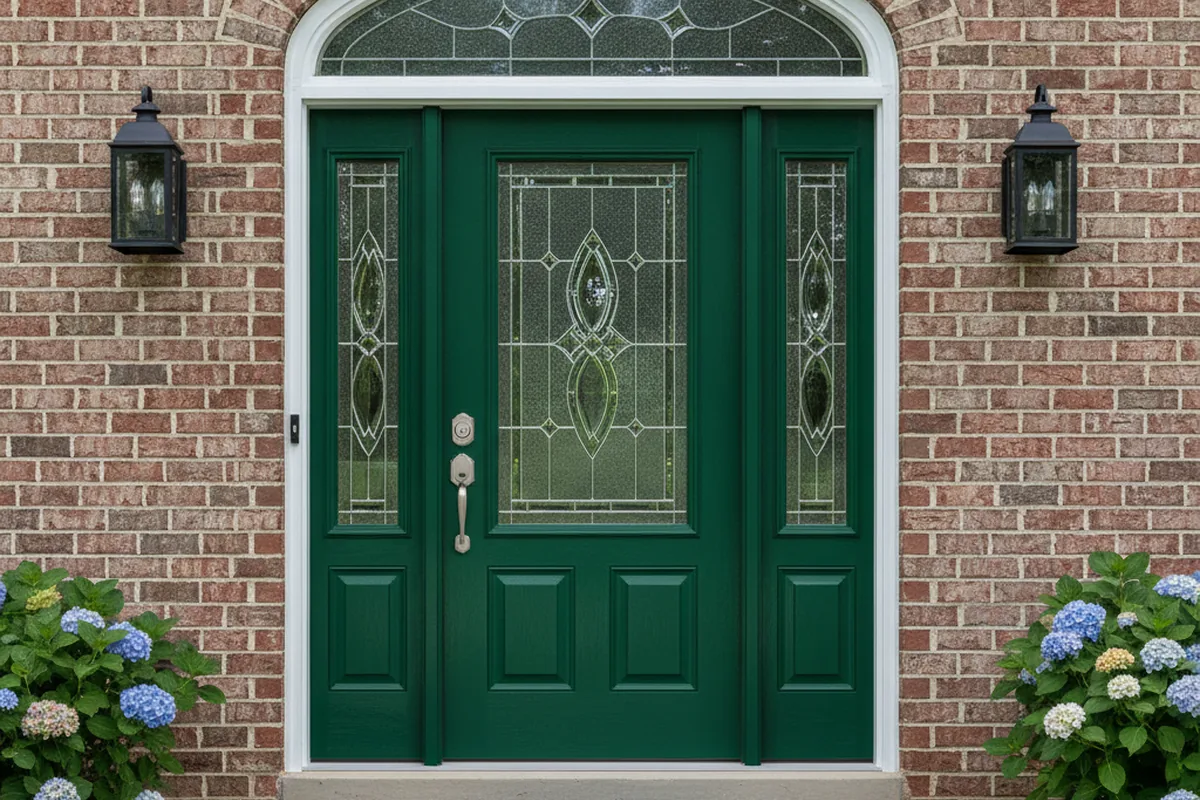
Entry & Front Doors
Your front door is the first thing guests see and your last line of defense against a Michigan winter—let's make it count.
Learn moreHelpful next steps: All door services · Door installation cost · Areas we serve · See our work · Reviews & our promise · Door FAQs · Financing options · About BH Door Solutions
Want a straight answer on your own doors?
Talk to a local metro Detroit crew. We measure, check the frames, and tell you plainly what your doors need.