Storm Door Repair or Replacement: How to Decide Before Winter
Closers, latches, sagging hinge rails and torn screens are almost always repairs. A racked frame or a rotted brickmould usually is not. Here is how to tell which one you have.
· Updated September 1, 2026 · BH Door Solutions
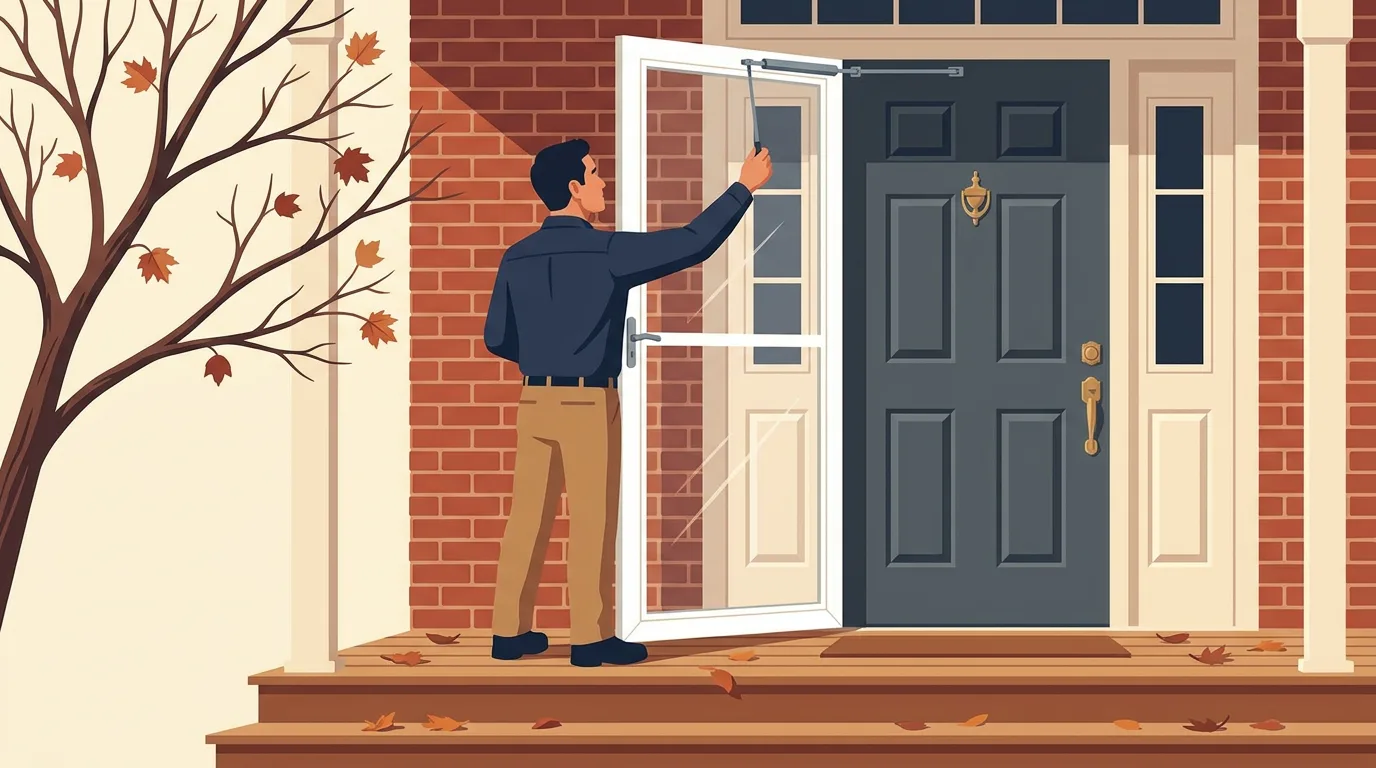
A storm door is the simplest part of your entry to fix and the easiest one to put off. It slams, or it stops latching, or the screen tears, and it stays that way until the first cold snap makes it everybody’s problem. The good news is that most of what goes wrong is a part rather than a door. The useful skill is telling the two apart before you spend money on either, and there is a simple test that settles it.
The five parts that actually fail
A storm door is a simple machine with very few moving parts, and nearly every complaint we get in Metro Detroit traces back to one of five of them. Knowing which one is misbehaving is most of the diagnosis, because four of the five are ordinary repairs.
The pneumatic closer is far and away the most common. It is the tube-and-arm assembly along the top of the door, and it has two jobs: slow the door on the way shut, and hold it open when you want it to stay put. A door that slams, drifts closed on its own, or no longer catches on the hold-open washer is telling you the closer is worn out or that its tension screw has never been touched. That is a part, not a door.
After the closer it is the latch and strike, the hinge rail, the inserts, and the sweep along the bottom. A latch that will not catch is usually an alignment problem rather than a broken handle. A door that sags or drags is normally screws that have lost their grip in soft wood, and the answer is longer fasteners into something solid or a new hinge rail. Screens tear and glass panes crack, and on most doors that are not several decades old both are replaceable.
- Pneumatic or hydraulic closer: slams, drifts shut, or will not hold open
- Latch and strike: the door closes but never quite catches
- Hinge rail: the door sags, drags on the sill, or the rail is pulling off the jamb
- Glass and screen inserts: cracked panes, torn or pet-damaged screens, panels that stick when you swap them
- Sweep and bottom expander: daylight underneath and a draft you can feel from the hallway
The one test that decides repair or replacement
Ignore the symptom for a moment and look at the frame. A storm door frame is a light aluminum rectangle whose entire job is to stay square. If the corners are still tight, the frame is straight, and the door sits parallel to the opening when you hold it shut, then whatever is wrong is a part you can replace and the door is worth keeping. That describes most of the doors we are called out to look at.
The replacement cases are narrower and easier to spot once you know what you are looking for. A frame racked out of square, almost always by wind catching an unlatched door, will never latch reliably again no matter how many times the strike is moved. Corners that have pulled apart, a bottom rail eaten through by road salt, and a mounting flange that has torn its screws out of rotted trim are all past the point where another part helps.
Age disqualifies a door in one specific way. Combination doors from the 1960s and 1970s are still hanging on plenty of Metro Detroit houses, and they work perfectly well right up to the day a glass panel cracks and nobody makes that insert any more. If a door depends on a part that is no longer manufactured, it is a replacement whether or not the frame is sound. Our storm door installation page covers both routes, and the estimate is the same free visit either way.
- Usually a repair: closer, latch, strike, hinge rail, screen, glass insert, sweep, weatherstripping
- Usually a replacement: racked or separated frame, salt-rotted bottom rail, torn-out mounting flange, or inserts that are no longer made
Why a full-view storm door and a dark entry door are a bad pair
This one catches people out, and it is worth knowing before you choose a replacement. A full-view storm door in front of a dark entry door on a south or west-facing porch turns the gap between the two into a small greenhouse. Sun comes through the glass, the dark slab soaks it up, and the trapped air gets considerably hotter than the day outside.
The damage shows up on the entry door rather than on the storm door: a blistered or peeling finish, a slab that warps enough to stop closing cleanly, and on some fiberglass and steel doors a skin that separates from the core. Entry door manufacturers have been warning about heat buildup behind storm doors for years, and it is common for a warranty to exclude finish damage caused by exactly this.
It is easy to design around. A ventilating or high-view model trades part of the glass for a screen, so the heat has somewhere to go. A retractable screen leaves the glass clear through winter and pulls across on demand in summer. A light-colored entry door behind the glass runs far cooler than a near-black one. And if the entry is shaded or faces north or east, the risk largely disappears and full-view is a fine choice. It is worth raising when you are replacing the main door as well, which is covered on our entry door installation page.
Matching the door to the entry it has to survive
Once heat is accounted for, style is mostly about how you use the entry. Full-view suits a shaded front door where light matters more than airflow. High-view and ventilating models suit a sunny entry, or any house where the front door is opened for air rather than for the view. A retractable screen suits a narrow porch where a swinging screen would be permanently in the way. A security storm door suits side and rear entries, where the point is a second locked layer you can leave shut with the main door open.
Wind exposure deserves as much thought as style, and gets almost none. An entry that catches the prevailing westerly has its storm door torn open far more often than a sheltered side door, and that is what racks frames and rips closers off their brackets. A wind chain, set so it stops the door before the closer arm reaches the end of its travel, is a few dollars of hardware that prevents the single most expensive storm door failure there is. Most doors ship with one. A surprising number are installed with it still in the box.
- Full-view: most light and the clearest view, best on shaded or north and east-facing entries
- High-view and ventilating: a screen panel above or below the glass, the safer pick in front of a dark or sun-struck entry door
- Retractable screen: clear glass in winter, screen on demand in summer, low profile on tight porches
- Security storm door: heavy-gauge frame, tamper-resistant hinges and a deadbolt-ready lock for side and rear doors
What changes from one Metro Detroit neighborhood to the next
On the prewar blocks of Royal Oak, Ferndale, Berkley and Clawson, the storm door is fastened into a wood brickmould that has been painted a dozen times and has taken eighty winters. Very often the door is sound and the wood behind it is not, so a sagging storm door on one of these houses turns out to be door frame repair and a rehang rather than a new door at all. Anyone who quotes a replacement without putting a screwdriver into that trim has not actually looked.
Across the postwar ranches of Allen Park and Lincoln Park, the common find is an original aluminum combination door that has outlived its own parts catalogue. The frames are frequently still straight and the closers are still replaceable, but a cracked insert on a door that old is usually the end of it.
In the newer subdivisions of Shelby Township, Chesterfield Township, Sterling Heights, Clarkston and Independence Township, and Lake Orion and Orion Township, the storm doors are builder-grade units fifteen to twenty years old on openings that were square when they were built and mostly still are. Here the closer and the sweep fail long before the frame does, and repair wins on cost almost every time.
Do it in the fall, not in January
Metro Detroit’s first hard freeze usually lands somewhere in October, and the storm door is the part of the entry that people notice only once it is already cold. That is a poor time to start. A worn closer is a same-visit part in September. In January it is a part plus a door that has spent six weeks slamming into a frozen frame.
There is a mechanical reason to tune in the shoulder season too. Pneumatic closers stiffen as the temperature drops, so a closer set in the heat of July pulls the door shut harder in December than anyone wants. Adjusting the tension in the fall, with the season it has to work through in mind, gets you a door that behaves at both ends of the year.
If it is a replacement rather than a repair, measuring and ordering in late summer leaves room for the door to arrive and go on before the weather turns. It is the least dramatic piece of seasonal maintenance on the house, and reliably the one still sitting on the list in February.
What the visit actually looks like
A storm door call starts with a free estimate and a look at three things in order: the frame, the trim or jamb it is fastened to, and the parts. That order matters, because the frame decides whether the parts conversation is worth having at all. We say plainly which of the two you are looking at, and if the door is worth saving we will tell you so even though the replacement is the larger job.
Repairs are usually a single visit. We carry closers, latches, strikes, hinge screws, sweeps and weatherstripping, re-spline screens, and rehang doors that have been taken off for siding or painting and never put back properly. We work on storm door repair for doors we installed and doors we did not, in any brand. A replacement takes measurements first, then a fitting visit once the door is in.
If your storm door is on the list, the useful next step is a look at the frame before the weather makes the decision for you. Ask for a free estimate and we will tell you which of the two it is.
Storm Doors questions we get asked
Is it worth repairing an old storm door?
Usually yes, and the frame is what decides it. If the corners are tight and the frame is still square, a closer, latch, hinge rail, sweep or screen is a straightforward repair and far cheaper than a new door. It stops being worth it when the frame has been racked out of square, the bottom rail has rotted through from road salt, the mounting flange has torn out of the trim, or the door needs an insert that is no longer manufactured.
Can a storm door damage my entry door?
It can, in one specific situation. A full-view glass storm door in front of a dark entry door on a sunny south or west-facing porch traps heat between the two, and that heat can blister the finish, warp the slab, or separate the skin on some fiberglass and steel doors. Many entry door warranties exclude this kind of damage. A ventilating or high-view model, a retractable screen, or a lighter-colored entry door all solve it, and a shaded or north-facing entry is not really at risk.
Why does my storm door slam in winter but not in summer?
Pneumatic closers get stiffer as the temperature drops, so the tension that felt right in July pulls the door shut harder in December. It is normally an adjustment on the closer rather than a fault, though a closer that has lost its damping altogether needs replacing. The other winter symptom, a door that suddenly will not latch, is more often a strike that has shifted than anything wrong with the door itself.
Do I still need a storm door if my entry door is new and insulated?
You do not need one for insulation the way you did with an old single-pane door, and a modern insulated entry door does most of that work by itself. What a storm door still buys you is a screen for ventilation, a shield that takes the wind-driven rain and road salt instead of your main door, and a second latched layer on side and rear entries. Plenty of homeowners with new entry doors add one for the screen alone.
Can you replace just the glass or the screen?
On most doors made in the last twenty years, yes. Screens can be re-splined with new mesh, including heavier pet-resistant mesh, and glass inserts can be swapped as long as the panel is still available for that model. Older combination doors are the exception, because a cracked panel on a door whose parts are discontinued often has no replacement at any price. We check availability before quoting so nobody is left waiting on a part that does not exist.
Services covered in this guide
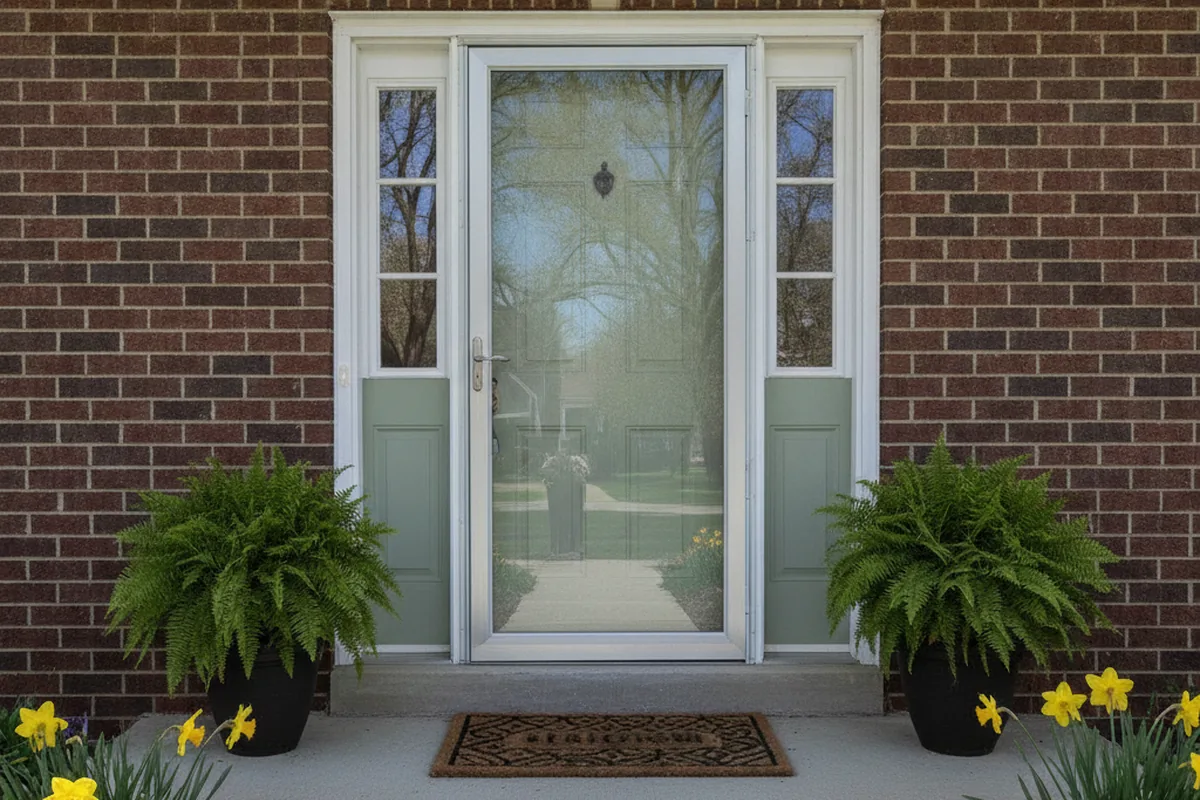
Storm & Screen Doors
Local storm door installers who supply the door as well as fit it, plus repairs to the storm door you already have.
Learn more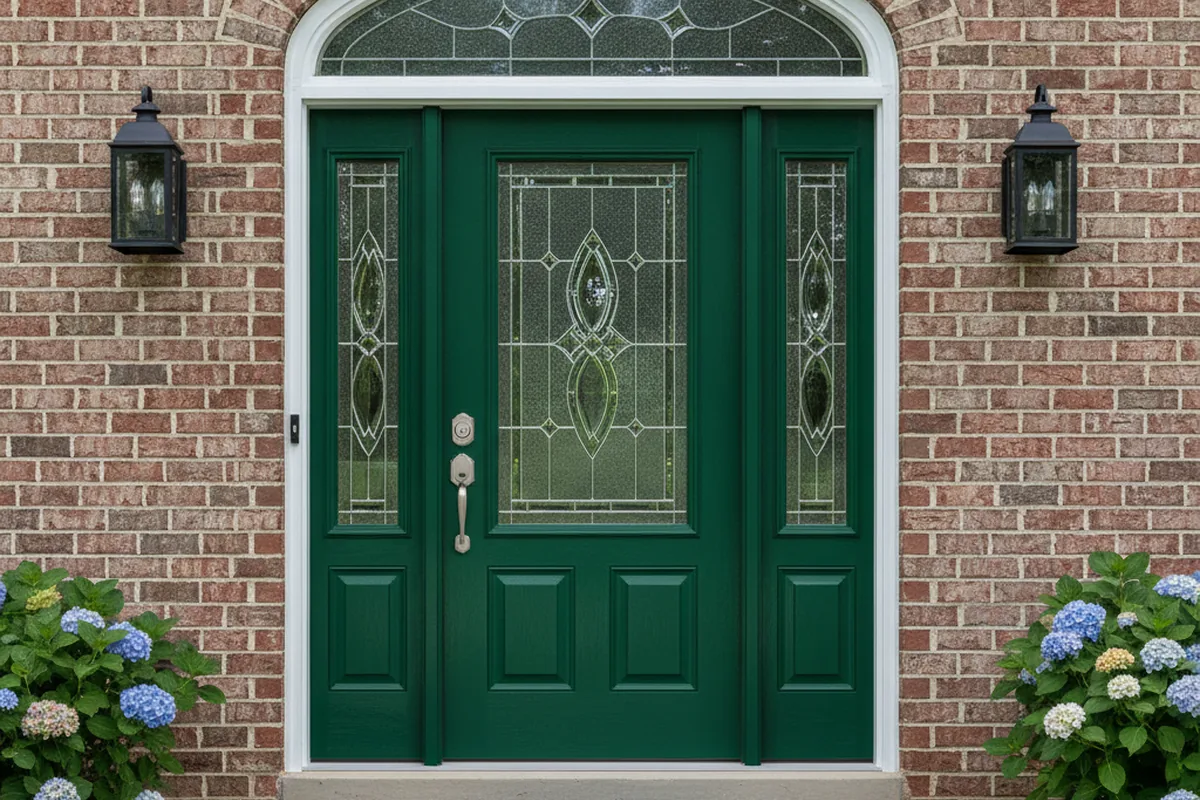
Entry & Front Doors
Your front door is the first thing guests see and your last line of defense against a Michigan winter—let's make it count.
Learn more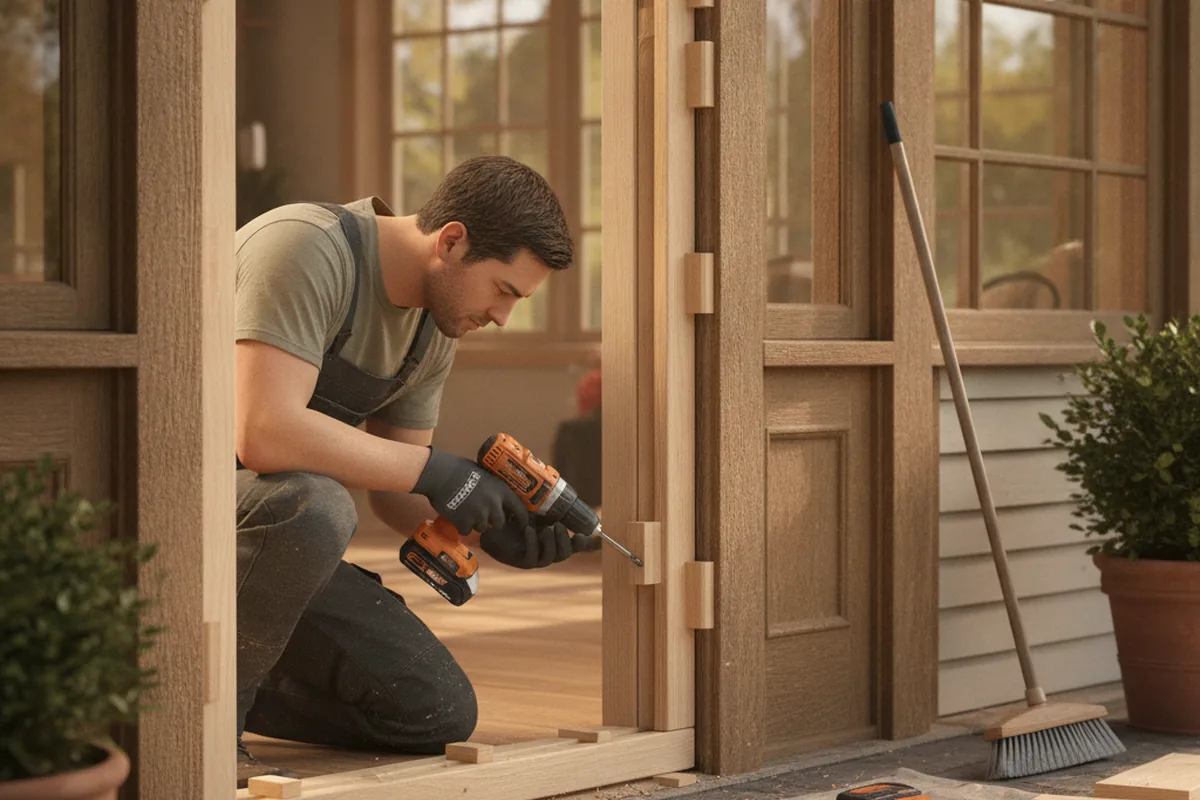
Door Frame & Jamb Repair
Split, rotted, or kicked in? We rebuild door frames and jambs solid and weathertight, with same-day service across Metro Detroit when the schedule allows.
Learn more
Door Repair
Sticking, drafty, or won't latch? We fix doors right the first time, with same-day service across Metro Detroit Sun–Thu whenever the schedule allows.
Learn moreHelpful next steps: All door services · Door installation cost · Areas we serve · See our work · Reviews & our promise · Door FAQs · Financing options · About BH Door Solutions
Want a straight answer on your own doors?
Get a free, no-obligation estimate from a local metro Detroit crew. We measure, check the frames, and quote flat rate.