Door Frame Repair or Replacement: How to Read What Your Door Is Telling You
When a door stops closing right, almost everyone blames the door. Far more often the frame around it has moved, softened, or split, and knowing which one it is decides whether this is an hour of work or a morning of it.
· BH Door Solutions
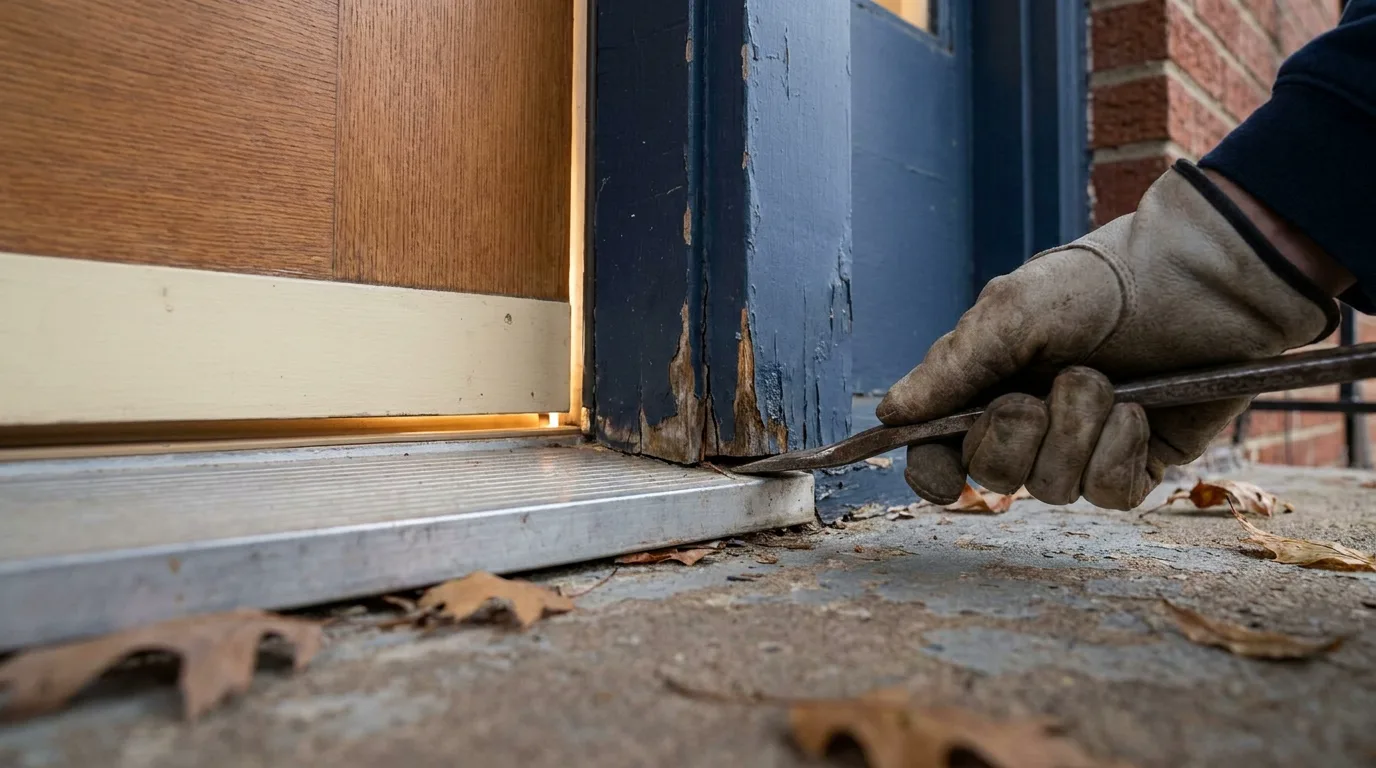
A door that sticks, drags, will not latch, or lets a draft through is one of the few household faults where the obvious suspect is usually innocent. Doors are rigid, and they rarely change shape on their own. Frames do. The jamb is soft wood, fastened to framing that moves with the seasons, sitting on a sill that takes every drop of water the porch throws at it. So when the opening stops working, the useful question is not what is wrong with your door. It is what has happened to the frame holding it, because that answer decides whether the fix is a splice, a jamb, or the whole unit.
Why the frame fails long before the door does
An exterior door is engineered to be stable. A modern fiberglass or steel slab has a rigid skin over an insulated core specifically so it will not swell, warp, or twist with humidity. Even a solid wood door is thick enough that it moves slowly and predictably. The frame around it is a different animal: relatively thin softwood, painted rather than clad, screwed into framing that settles, and terminating in a sill that collects standing water every time it rains.
That asymmetry is why the diagnosis so often lands on the frame. The slab stays the size it was. The opening around it does not. When the two stop matching, the symptom shows up at the door, which is why the door gets blamed and sometimes gets replaced when it did not need to be.
The practical consequence is worth stating plainly, because it saves people money: a door that closed properly for years and no longer does has almost certainly not changed. Something around it has. Working out what, before ordering anything, is the whole job.
- The slab is rigid by design; the jamb is softwood that absorbs moisture
- The frame is fastened to house framing that settles and shifts seasonally
- The sill and the bottom few inches of jamb take nearly all the water exposure
- The symptom always shows at the door, which is why the door gets blamed
Five symptoms and what each one usually means
Most frame faults announce themselves in one of a handful of ways, and the specific symptom narrows the cause considerably before anyone touches a tool. It is worth spending five minutes with your own door before you call anyone, because what you can describe on the phone shapes how accurately the visit can be planned.
Start with the gap. Close the door and look at the line between the slab and the frame all the way around. On a healthy opening that gap is even from top to bottom. If it is tight at the top and wide at the bottom on the latch side, or the reverse, the frame is out of square rather than the door being the wrong size. A gap that is even everywhere but simply too wide points instead at compressed or missing weatherstrip.
Then check where it binds. A door that rubs only at the top corner on the latch side is usually a hinge or a settling problem; one that drags along the floor or on the threshold is often a sill or a bottom-jamb problem. And a door that latches only if you lift it or lean on it has almost always lost the alignment between the latch and the strike, which is a frame position issue, not a lock issue.
Finally, press the bottom eight inches of the jamb and the sill with a thumb. Sound wood resists. Wood that gives, feels spongy, or leaves a dent is rotted behind the paint, and paint is very good at hiding this until it is well advanced.
- Uneven gap around the closed door: the frame is out of square
- Even but wide gap with a visible draft: weatherstrip has compressed or gone
- Binding at one top corner: hinges or settling, often the smallest fix on this list
- Dragging at the bottom or on the threshold: a sill or bottom-jamb problem
- Latching only when lifted or pushed: the strike and latch no longer line up
- Jamb or sill that gives under thumb pressure: rot behind intact paint
What Michigan weather actually does to a jamb
Rot at the bottom of an exterior jamb is the single most common frame fault in this service area, and the mechanism is specific enough to be worth understanding. Water gets behind the paint film at a joint, a nail hole, or a hairline crack. It soaks into end grain, which absorbs far faster than face grain. Then it freezes, expands, and widens the path it came in by. The next thaw lets more water in through a bigger opening, and the cycle repeats every time the temperature crosses freezing.
Metro Detroit gives that cycle a great deal to work with. Freeze and thaw crossings run through most of the winter and well into spring rather than happening once, so a small breach in the paint in November can be a soft two inches of jamb by April. This is also why the damage is so often invisible until someone presses on it: the paint film stays continuous while the wood behind it turns to pulp.
Three details make it worse on a particular house. A porch or stoop that has settled toward the door instead of away from it delivers water to the sill rather than shedding it. A missing or failed door sweep lets wind-driven rain reach the back of the threshold. And a storm door, counterintuitively, can trap heat and moisture against the entry door and its frame in a way that accelerates the problem rather than shielding it from weather.
- Water enters through a break in the paint and wicks into the end grain
- Freeze-thaw widens the breach with every crossing, then admits more water
- Paint stays intact over pulped wood, hiding the damage until it is pressed
- A stoop pitched toward the house feeds the sill instead of draining it
- A failed sweep or threshold seal lets wind-driven rain behind the door
- A storm door can trap warm moist air against the entry door and its frame
When a splice is enough, and when the jamb has to come out
This is the decision that actually changes the size of the job, and it turns almost entirely on how far the damage has travelled rather than on how bad it looks. Rot confined to the lower portion of one jamb leg, with sound wood above it and a sill that is still solid, is a splice: the damaged section is cut out, new solid or composite stock is let in, and the repair is primed and sealed. The door, the hardware, and the rest of the frame all stay where they are.
The threshold changes the calculation. If the sill beneath the threshold has gone soft, a jamb splice alone puts new wood on top of a failing base, and the repair will come back. The same is true when rot has reached the framing behind the jamb rather than stopping at the jamb itself, which is more common on older entries where the breach has been there for several seasons.
The other route to a full replacement is geometry rather than decay. When the opening itself has racked far enough out of square that no amount of repair to the jamb will let the door close evenly, the frame has to be reset rather than patched. That is a bigger job, and it is worth knowing which one you are looking at before the work starts, which is exactly what a look at the opening is for. Our page on door frame repair covers what each of those routes involves in practice.
Composite jamb stock is worth asking about when the repair is at the bottom of an exterior leg, because it does not absorb water the way softwood does and it removes the mechanism that caused the failure in the first place. It is not the right answer everywhere, but on a jamb that has already rotted once at the sill, replacing like for like invites the same outcome.
- Rot in the lower part of one jamb leg, sound sill: a splice, with the door left in place
- Soft sill under the threshold: the base has to be dealt with, not covered over
- Rot reaching the framing behind the jamb: beyond a jamb-only repair
- An opening racked badly out of square: the frame gets reset rather than patched
- A split from forced entry: repair depends on whether the strike area is still sound
- Composite stock at the sill end removes the absorption that caused the failure
The drafts are usually a frame problem too
A draft you can feel at the edge of a closed door means daylight is getting through somewhere, and there are only a few places it can be. The weatherstrip in the jamb may have compressed, hardened, or pulled loose from its kerf. The sweep at the bottom of the slab may have worn or torn. The threshold may have dropped or, on an adjustable type, simply need raising back to where it seals. Or the frame is out of square, in which case the gap is uneven and no amount of new weatherstrip will close it because the geometry is wrong.
That last case is the one worth separating out, because it is where money gets wasted. Fitting fresh weatherstrip to a frame that has moved will improve things slightly and then fail again, because the seal is being asked to bridge a gap that varies from top to bottom. The order of operations matters: get the opening square and the frame sound first, then seal it.
There is a straightforward way to check which situation you are in. On a bright day, close the door and turn the lights off inside. Daylight visible in a thin, even line all the way down the latch side is a seal problem. Daylight that is a sliver at one end and a wedge at the other is a frame problem. A cold draft with no visible light at all is usually the threshold or the sweep at the bottom, where the seal is horizontal and easy to miss.
- Compressed or hardened weatherstrip that no longer bridges the gap
- A worn or torn door sweep along the bottom edge of the slab
- A threshold that has dropped, or an adjustable one that needs resetting
- An out-of-square frame, where the gap itself is uneven and sealing will not hold
- The lights-off daylight test tells the seal cases apart from the frame cases
What a forced-entry jamb needs beyond a cosmetic repair
A kicked-in door frame is a different problem from a weathered one, and it deserves saying clearly: the visible damage and the structural damage are not the same size. What usually gives way is a short section of jamb around the strike plate, splitting along the grain where short screws were holding into thin material. The door itself is frequently undamaged, and so is most of the frame.
The reason a cosmetic patch is not adequate here is that the opening failed once at a known point, and putting the same short screws back into filled and glued softwood recreates the same weakness. A proper repair addresses the strike area rather than the paint: sound material spliced in where the jamb split, a reinforced strike plate, and long screws that reach past the jamb into the framing behind it rather than stopping in the jamb itself.
It is also the right moment to look at the hardware as a whole, since the frame is open and the lock geometry is being reset anyway. If the strike and the latch were marginal before, they are worth correcting now rather than on a separate visit later. Lock and hardware installation and the jamb repair are naturally the same trip.
- The split is usually local to the strike area, not the whole frame
- The door slab itself often survives a kick-in intact
- Filling and painting restores the look but not the resistance
- Sound material spliced in, a reinforced strike, and screws reaching the framing
- Hardware alignment is worth resetting while the frame is already open
Why this is a September and October job, not a January one
There is a reason to look at this now rather than after the weather turns. Metro Detroit usually sees its first freeze in the second half of October, and almost every part of a frame repair goes better on the warm side of that date. Exterior wood filler, primer, paint, and caulk all have minimum application temperatures, and a repair that cannot be properly sealed is a repair that will let water back in at the joint it was meant to close.
There is also the matter of what winter does to an unrepaired frame. A jamb that is soft in September is a jamb that will absorb water and freeze several dozen times before spring, and the damage is not linear. The difference between a splice and a full jamb replacement is often a single winter of freeze-thaw working on wood that had already lost its paint seal.
The same reasoning applies to seals. A draft you can feel at the door edge in September is the same gap that will be costing you heat in January, and weatherstrip, sweeps, and thresholds are all easier to fit and adjust before the frame is cold and wet. If a new door is on the cards anyway, our guide to how long a front door replacement takes covers the lead times, because a built-to-order unit ordered in late autumn is a unit fitted in the cold.
What to look at before you call
None of this requires tools, and ten minutes on your own porch makes the first conversation far more useful. What matters is describing the symptom accurately rather than guessing at the cause, because the symptom is what narrows the diagnosis.
Older housing stock through Ferndale, Royal Oak, Hazel Park, and Lincoln Park tends toward original softwood jambs that have taken decades of freeze-thaw, so rot at the sill end is the usual find. Newer subdivisions out through Shelby Township, Macomb Township, and Clarkston more often produce settling and out-of-square openings than decay. Neither is a diagnosis on its own, but it is a reasonable expectation to walk in with.
If the door itself turns out to be sound and only the frame needs work, that is the good outcome and it is the common one. If the opening has moved far enough that a new unit is the sensible answer, entry door installation is where that conversation goes, and it is better reached by elimination than by assumption.
- Which door, and whether it is an entry, side, service, or interior opening
- The exact symptom: sticking, dragging, not latching, draughty, or visibly damaged
- Whether the gap around the closed door is even or wedge-shaped
- Whether the bottom of the jamb or the sill gives under thumb pressure
- Whether a storm door is fitted, since it changes both access and moisture
- How long it has been happening, and whether it is worse in a particular season
Door Repair questions we get asked
My door sticks. How do I know it is the frame and not the door?
Close the door and look at the gap between the slab and the frame all the way around. If that gap is even from top to bottom, the two parts still match each other and the problem is more likely hinges, hardware, or weatherstrip. If the gap is tight at one end and wide at the other, the frame has moved out of square, and no adjustment to the door will correct it because the opening is no longer the shape the door was fitted to. Doors are rigid by design and rarely change on their own, so an opening that worked for years and no longer does has usually changed around the door rather than because of it.
The bottom of my door frame is rotting. Can that be repaired without replacing the frame?
Often yes, and it is the usual outcome when the damage is caught while it is still confined to the lower part of one jamb leg. The rotted section is cut out, sound solid or composite stock is spliced in, and the repair is primed and sealed so water cannot get back into the joint. What changes the answer is depth rather than appearance. If the sill under the threshold has also gone soft, or the rot has reached the framing behind the jamb, then new material is being fitted onto a failing base and the repair will not hold. That is why the sill gets checked as part of the diagnosis rather than after the work has started.
Someone kicked in my door and split the jamb. Is a repair enough, or do I need a new frame?
In most kick-ins the door slab and the bulk of the frame survive, and the split is local to the strike area where short screws were holding into thin jamb material. That is repairable. What matters is that the repair addresses the reason it failed rather than just the way it looks: sound material spliced into the split, a reinforced strike plate, and screws long enough to reach the framing behind the jamb instead of stopping in the jamb. Filling and repainting restores the appearance while leaving the same weak point in place, which is the outcome worth avoiding.
Will new weatherstripping stop the draft around my door?
It depends what is producing the gap. If the seal has simply compressed or hardened with age and the gap around the closed door is even, then replacing the weatherstrip, the sweep, or resetting an adjustable threshold will deal with it. If the gap is wedge-shaped, wide at one end and tight at the other, the frame is out of square and a seal is being asked to bridge a gap that varies along its length. New weatherstrip will improve that slightly and then fail again. In that case the order matters: get the frame sound and square first, then seal it.
Is there a reason to do this before winter rather than after?
Two, and they compound. The first is that exterior filler, primer, paint, and caulk all have minimum application temperatures, so a repair carried out in the cold is harder to seal properly, and an unsealed repair lets water back into the joint it was meant to close. The second is that freeze-thaw is what causes most of this damage in the first place. A jamb that is soft in September will absorb and freeze many more times before spring, and the difference between a splice and a full jamb replacement is frequently one winter of that cycle acting on wood whose paint seal has already broken.
Services covered in this guide
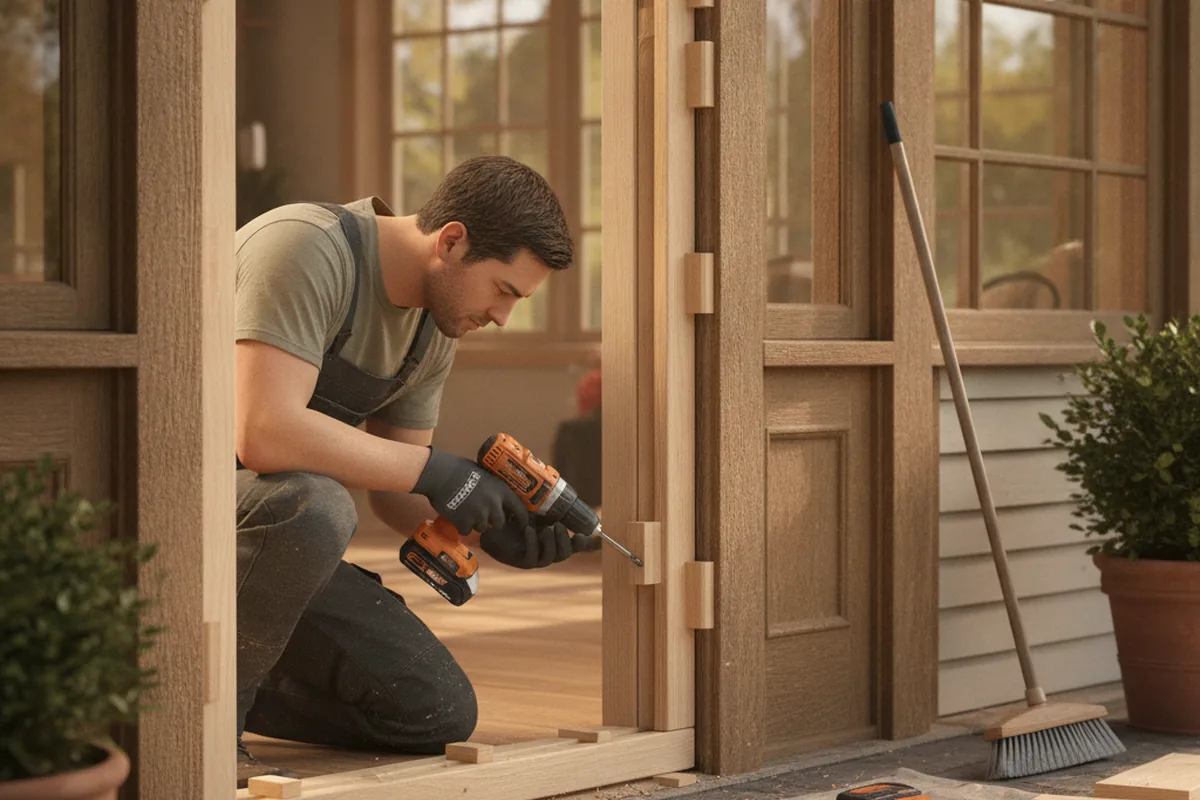
Door Frame & Jamb Repair
Split, rotted, or kicked in? We rebuild door frames and jambs solid and weathertight, with same-day service across Metro Detroit when the schedule allows.
Learn more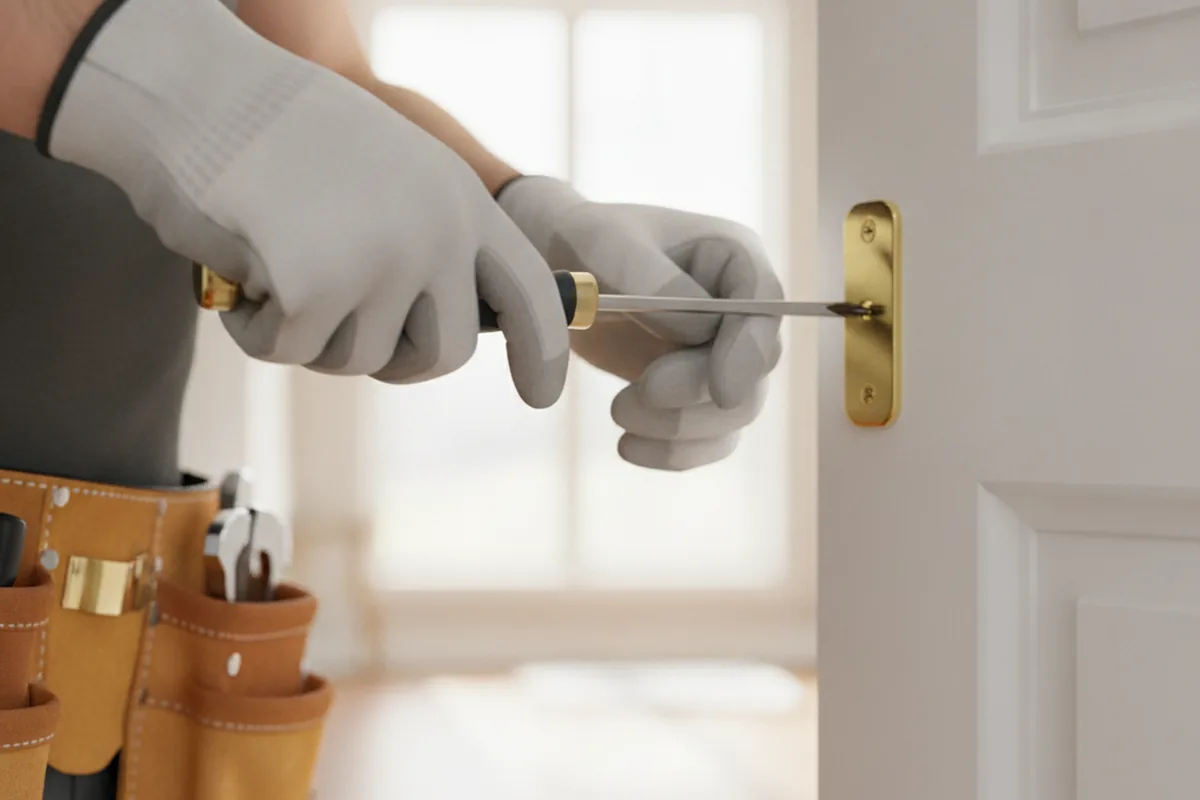
Door Repair
Sticking, drafty, or won't latch? We fix doors right the first time, with same-day service across Metro Detroit Sun–Thu whenever the schedule allows.
Learn more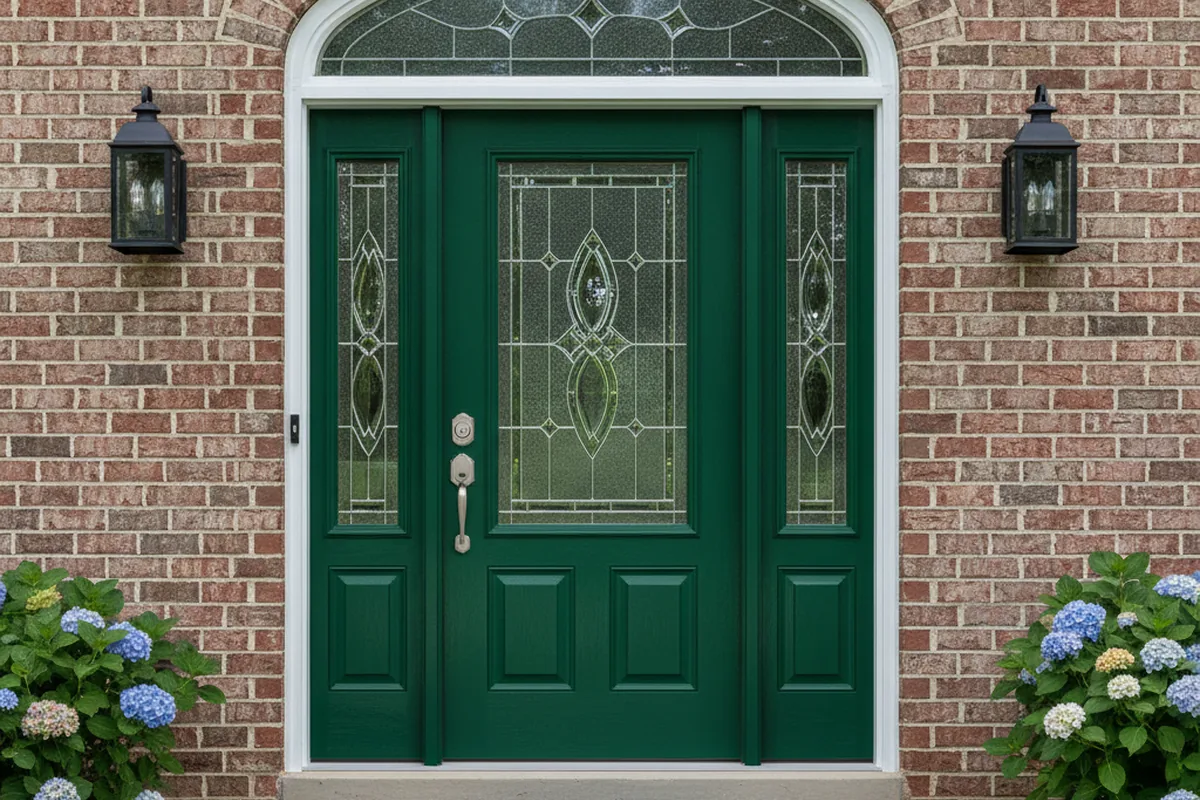
Entry & Front Doors
Your front door is the first thing guests see and your last line of defense against a Michigan winter—let's make it count.
Learn more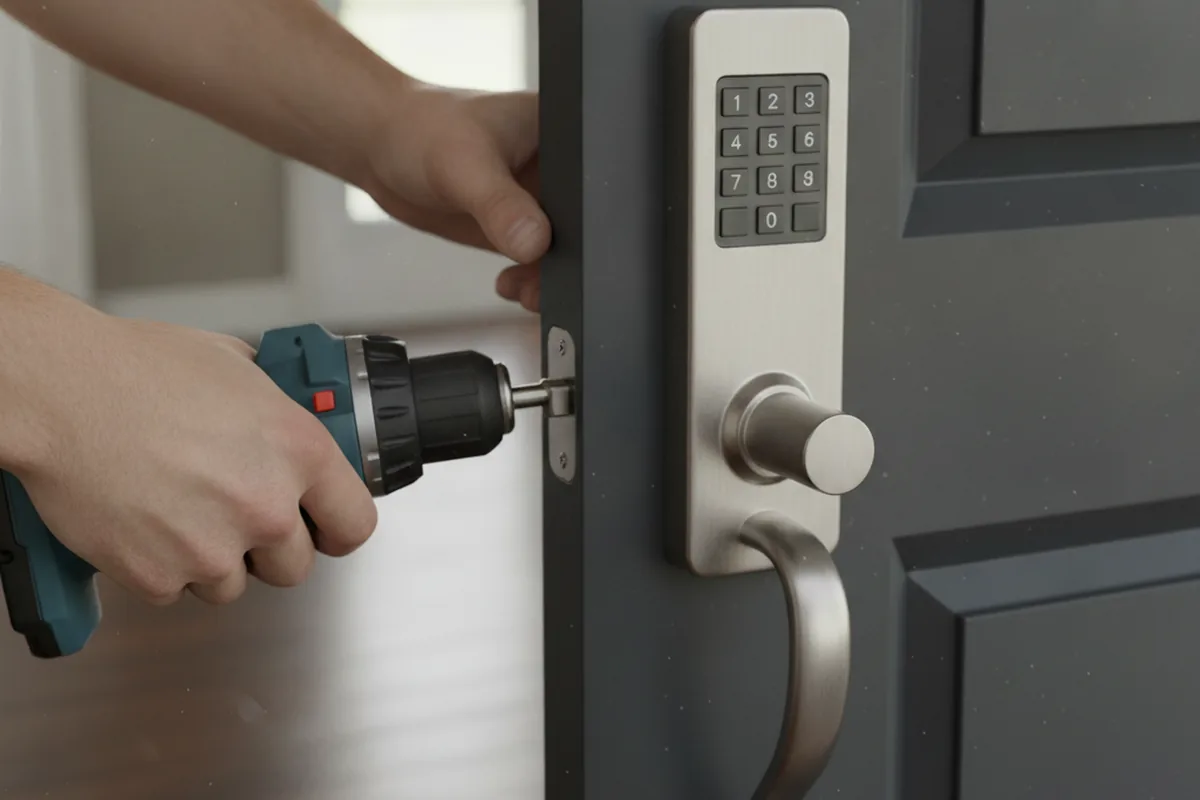
Locks & Hardware
Deadbolts that won't throw, wobbly handles, a lock that won't turn in the cold — we install, rekey, and repair door hardware right the first time, often the same day.
Learn moreHelpful next steps: All door services · Door installation cost · Areas we serve · See our work · Reviews & our promise · Door FAQs · Financing options · About BH Door Solutions
Want a straight answer on your own doors?
Talk to a local metro Detroit crew. We measure, check the frames, and tell you plainly what your doors need.