Why Is There Condensation on the Inside of My Front Door?
Water on the inside of a front door in cold weather is warm, damp indoor air meeting a surface colder than its dew point. Where the drops sit, on the glass, between the panes or behind a storm door, tells you whether it is humidity or a door problem.
· BH Door Solutions
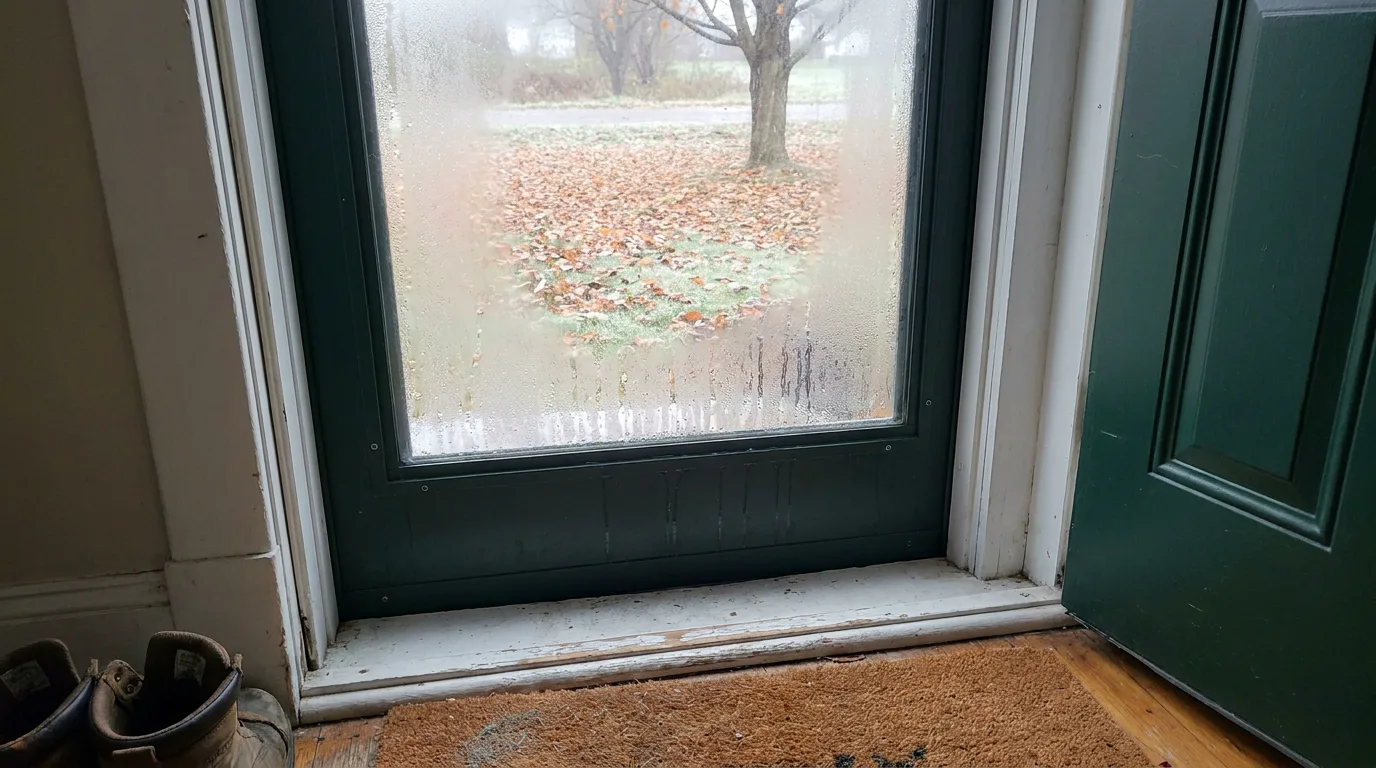
Condensation on the inside of a front door means warm, moist air from inside the house is touching a surface that is colder than its dew point, and the water in the air turns back into droplets. On a front door that surface is almost always the glass, the metal skin of a steel door, or the glass of a storm door in front of it. A little fog on a frosty morning is normal; water that runs, freezes, or comes back every day is telling you something. Where the water sits is the clue: on the room side of the glass it is mostly indoor humidity, between the panes it is a failed glass seal, and on the storm door it is warm air leaking past the entry door. The first frost advisory of the season covered Wayne, Oakland and Macomb counties on the night of October 16, 2026, so this is the week many Metro Detroit homeowners notice it for the first time.
Look at where the water is first
Before you change anything, wipe the door dry in the evening and look again first thing in the morning, when it is coldest outside. Note exactly where the water came back. That one observation separates a house problem from a door problem.
Run a finger over the glass. If it wipes away on the room side, the moisture is coming from inside the house. If your finger comes away dry and the fog is still there, it is trapped between the panes. If the entry door glass is clear but the storm door in front of it is dripping, the moisture is getting out through the entry door.
- Fog or drops on the room side of the glass: indoor humidity is high for the outdoor temperature
- Fog between the two panes that will not wipe off: the sealed glass unit has failed
- Water or frost on the inside of the storm door glass: warm air is leaking past the entry door seals
- Frost or drops on the inside face of a steel door, often near the edges or the lock: a cold spot or a seal gap
- Water on the floor or stains on the sill: condensation that has been running for a while, check the wood
Water on the room side of the glass: humidity
Glass is the coldest surface in most entry halls, so it is where moist air shows itself first. Cooking, showers, drying laundry, a lot of houseplants or a humidifier turned up for dry winter air all add water to the air, and the door glass collects it.
Buy an inexpensive hygrometer and put it in the hall. Once outdoor temperatures drop below freezing, building scientists and utility guides generally suggest keeping indoor relative humidity somewhere around 30 to 40 percent, and lower during a hard cold snap. If yours reads 50 percent in November, the door is doing its job and simply showing you the reading.
Run the bathroom and kitchen fans while you use them and for a while after, make sure the dryer vents outside, turn a furnace humidifier down as the weather gets colder, and do not let a heavy curtain or a closed vestibule trap the door away from the heated air. A small amount of air movement across the glass is often enough to keep it clear.
Fog between the panes: a failed glass seal
Door glass with two or three panes is sealed at the edges so the air between them stays dry. Years of sun, freeze-thaw cycles and the door slamming break that seal, damp air gets in, and the fog appears between the panes where no cloth can reach. It often comes and goes with the weather at first, then leaves a permanent haze or mineral streaks.
No change in humidity will fix it. Depending on the door, the glass insert can sometimes be replaced on its own, set in a new frame kit, or, on an older door that is failing in other ways too, the door is the better thing to replace. That decision is part of a door repair visit, and if replacement makes more sense we cover it under entry door installation.
Water behind a storm door: warm air getting out
A storm door creates a pocket of air between itself and the entry door. On a cold night that pocket is close to outdoor temperature. If the entry door seals well, the pocket stays dry. If the weatherstripping on the entry door is worn or the door does not close tight, warm, damp house air drifts into the pocket and condenses on the storm door glass, sometimes freezing into a sheet of frost.
Some fog there on the coldest mornings is normal, and many storm doors have a vent or a screen panel that can be opened slightly to let the pocket breathe. Heavy water every day means the entry door is leaking air, the same gaps that let cold drafts in. Our guide on how to stop cold air coming in under a front door shows how to find those gaps with a paper strip and a flashlight.
If your storm door does not suit the entry behind it, our storm door installation page explains what we fit in Michigan.
Frost on the door itself: a cold spot
Steel doors are skinned in metal over an insulated core. Where the core is thin, at the edges, around the lock and the handle, or where the foam has settled in an old door, the inside surface can get cold enough to collect drops or even frost. Frost along the latch edge or at one corner usually means the weatherstripping there is not touching, and outside air is cooling that spot.
Check the seal first: close the door on a strip of paper along each side and see whether it pulls out with no drag. Replacing worn weatherstripping or adjusting the strike so the door pulls tight often stops it. Frost across the whole face of an old steel door means the insulation is no longer doing much, and rust at the bottom edge means the condensation has been there for several winters.
When the water has already done damage
Condensation that drips every morning all winter does not stay on the glass. It runs down onto the bottom rail of the door, the sill and the floor, and on wood it is a slow, steady source of rot. Check the bottom of the door, the threshold and the lower jambs with a screwdriver tip. Soft, dark or flaking wood needs door frame repair before the next winter, not just a new seal.
What a fix costs depends on what the morning check finds: humidity and seal adjustments are small jobs, a replacement glass insert depends on the door and the glass size, and a rotted sill or a door that needs replacing is more work. We do not publish prices on this site because every door is different. Call (313) 236-4558 for a price on your job.
We repair and replace entry and storm doors across Wayne, Oakland and Macomb counties, including Detroit, Royal Oak, Troy, Warren, Dearborn and Southfield. Call (313) 236-4558, Sunday to Thursday 9am to 5pm and Friday 9am to noon, or contact us and we will call you back.
- Fog between the panes that will not wipe away
- Water running onto the sill or the floor every morning
- Soft, stained or swollen wood at the bottom of the door or frame
- Rust along the bottom edge of a steel door
- Frost on the storm door glass even with the indoor humidity under control
Door Repair questions we get asked
Is condensation on my front door glass normal in winter?
A light fog on the coldest mornings that clears within an hour or two is normal, especially on single-pane or storm door glass. Water that runs, freezes, or returns every day means the indoor humidity is high for the temperature outside or the door is leaking air, and it is worth fixing before it damages the wood.
Why is there condensation between the panes of my door glass?
The seal around the edge of the sealed glass unit has failed and damp air has got between the panes. Lowering indoor humidity will not clear it. The glass insert needs replacing, or on an older door that is failing in other ways, the door does.
Why is my storm door wet on the inside?
Warm, moist air from the house is getting past the entry door into the space between the two doors and condensing on the cold storm door glass. Some of it on frosty mornings is normal; a lot of it means the entry door weatherstripping is worn or the door does not close tight.
What indoor humidity stops condensation on a front door?
Once it is freezing outside, keeping indoor relative humidity around 30 to 40 percent prevents most of it, and lower during a hard cold snap. A cheap hygrometer in the entry hall tells you where you are.
What decides the cost of fixing condensation on a front door?
Whether the cause is humidity, a worn seal, a failed glass unit or water damage to the frame, plus the door material and the glass size. We do not publish prices because every door is different. Call (313) 236-4558 for a price on your job.
Services covered in this guide

Door Repair
Sticking, drafty, or won't latch? We fix doors right the first time, with same-day service across Metro Detroit Sun–Thu whenever the schedule allows.
Learn more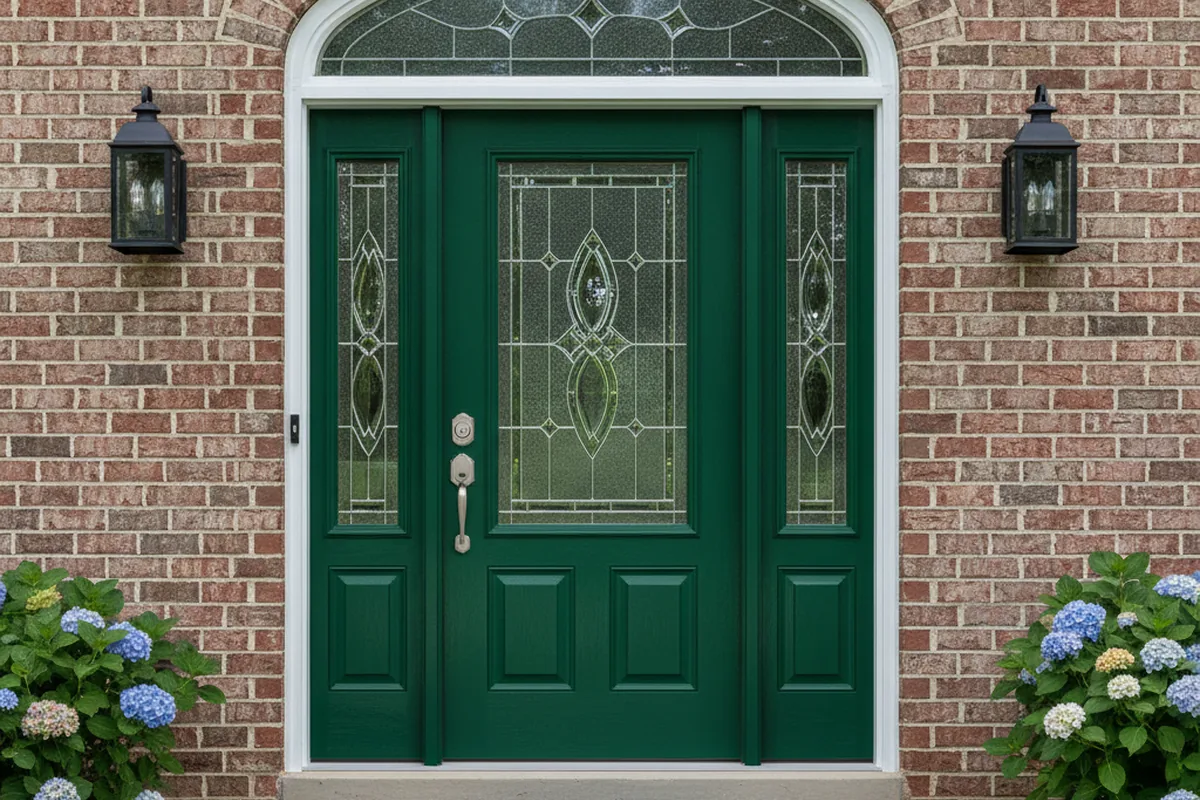
Entry & Front Doors
Your front door is the first thing guests see and your last line of defense against a Michigan winter—let's make it count.
Learn more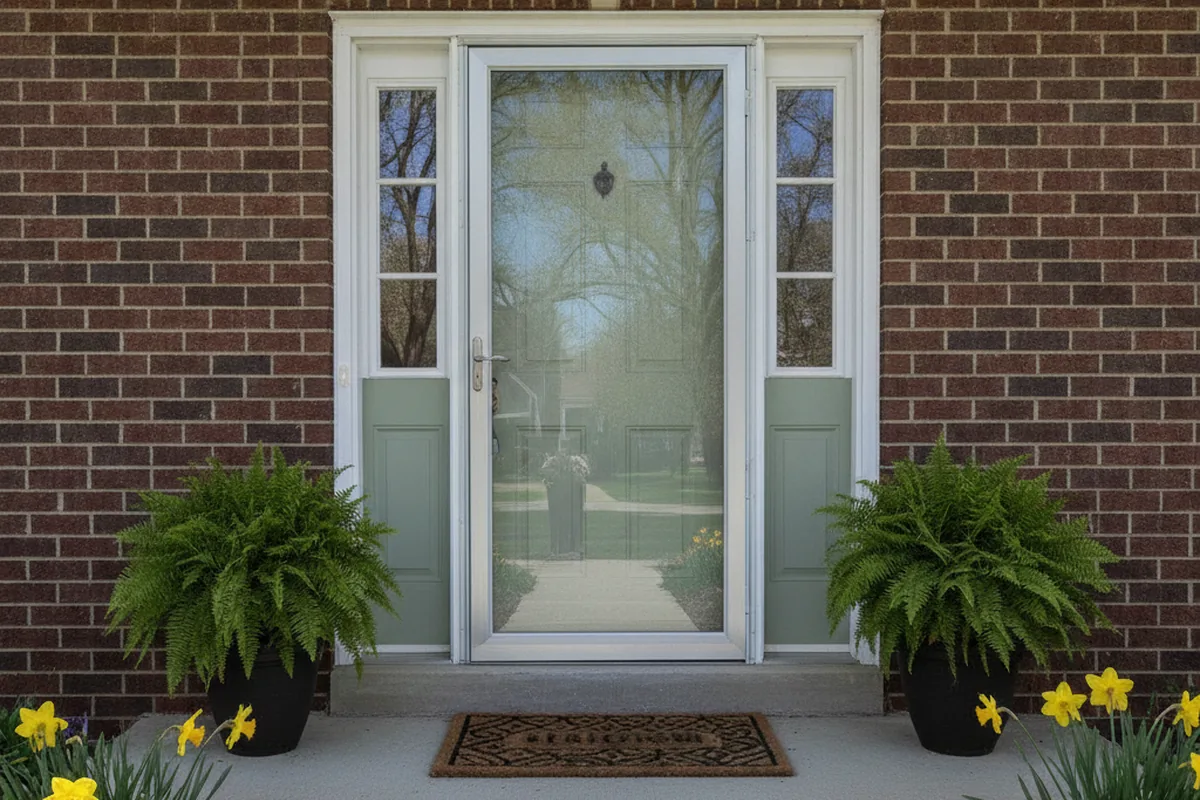
Storm & Screen Doors
Local storm door installers who supply the door as well as fit it, plus repairs to the storm door you already have.
Learn more
Door Frame & Jamb Repair
Split, rotted, or kicked in? We rebuild door frames and jambs solid and weathertight, with same-day service across Metro Detroit when the schedule allows.
Learn moreHelpful next steps: All door services · Door installation cost · Areas we serve · See our work · Reviews & our promise · Door FAQs · Financing options · About BH Door Solutions
Want a straight answer on your own doors?
Talk to a local metro Detroit crew. We measure, check the frames, and tell you plainly what your doors need.